How a Roman Bank Moved to Moscow, or the Secret of One Ballerina...
Look carefully at this building. This is the Palazzo del Banco di Santo Spirito in Rome. If you have been to the capital of Italy, you may not have even paid attention to it: there is a lot of similar architecture there. Now, those who know Moscow, look at this old photo again and tell me: did you get a feeling of déjà vu? Did you know that an almost exact copy of this bank stands on our Kuznetsky Most? Yes, yes, that same monumental building with the golden inscription "БАНКЪ" (BANK) on the pediment is a somewhat free repetition of the Roman architectural object.
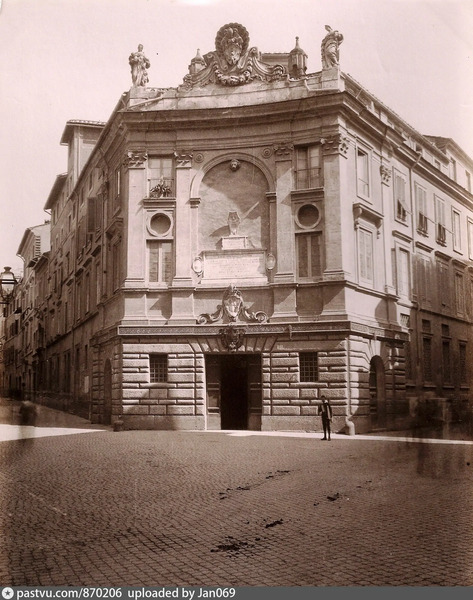 The bank building in Rome that served as the prototype for the bank on Kuznetsky Most
The Moscow Double
The building called the Palazzo del Banco di Santo Spirito was originally built for the papal mint in the 16th century. This bank was also one of the first public deposit institutions in Europe. Its key function was that it accepted money for safekeeping from citizens, the church, and the nobility, and then used it to issue loans and finance public projects. Later, designed by the architect Borromini, the building was completed, and the facade, decorated with the statues of Charity and Thrift, became a model for imitation for centuries.
This model was used by Lazar Solomonovich Polyakov—a man of legend. The son of a poor Jewish merchant from near Orsha, he began his career as a humble contractor on construction sites for his older brother and eventually became the king of railways, earning the nickname the "Moscow Rothschild". He owned a network of banks throughout Russia, rose to the rank of Privy Councillor, became a nobleman, and even received the post of Consul General of Persia in Moscow.
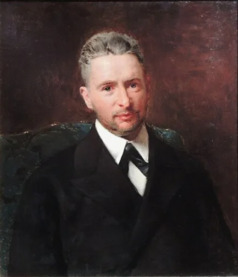 Portrait of Lazar Polyakov painted by Konstantin Makovsky in 1882
In the 1890s, Polyakov bought a plot on Kuznetsky Most from the famous merchant Vera Firsanova and began the construction of the main bank of his empire—the Moscow International Trade Bank. He attracted Semyon Eibuschitz to the construction—an Austrian subject, a graduate of the Moscow School of Painting, Sculpture and Architecture, who at that time was one of the most expensive architects in the country. Prior to this, Eibuschitz had already built the Moscow Choral Synagogue for Polyakov—so the client had every reason to trust the master.
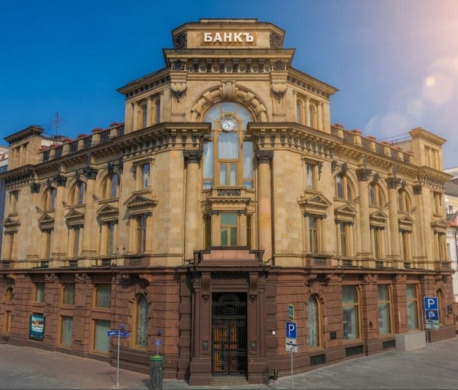 The Moscow International Trade Bank of Lazar Polyakov
And he made an almost exact copy of the Roman facade—with the same heavy rustication at the bottom and elegant details at the top. The architectural style of the building is Neo-Renaissance with elements of Baroque, very popular in Russia at the turn of the 19th–20th centuries. But inside, Polyakov did not copy the Italians. Vladimir Shukhov, the genius of Russian engineering, had already worked there. His light metal ceilings and the huge glass lantern above the operating hall are quite recognizable: spacious, bright, and nothing superfluous. Surprisingly, throughout all the years of its existence, the building on Kuznetsky Most stubbornly followed its banking purpose...
So Who Is the Father?..
The legend of the great ballerina Anna Pavlova is associated with Polyakov. Officially, she was the daughter of the seamstress and laundress Lyubov Pavlova and the retired soldier Matvey Pavlov (according to another version—the Crimean Karaite Shabetay Shamash). But many biographers believe that Anna's real father was precisely Lazar Polyakov.
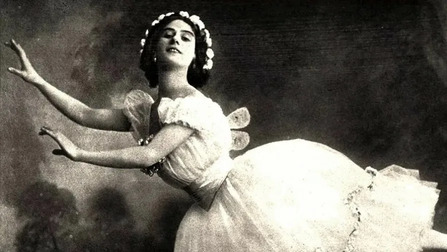 Ballerina Anna Pavlova
They say that the future ballerina's mother worked as a maid on the banker's estate, and he, to hush up the scandal, gave her generous compensation, with which she bought a house and opened her own laundry. The ballerina herself denied this version during her lifetime and told a made-up story about a deceased officer father. Meanwhile, the girl was raised in the family of Lazar Solomonovich. He also gave her an excellent education. Even as a child, Anna visited the Mariinsky Theatre: without Polyakov's support, this would hardly have been possible.
When Lazar Polyakov died in 1914, newspapers wrote that "the famous Russian ballerina Anna Pavlova arrives in Russia for a very short time due to a very sad circumstance". No one doubted: she had come to say goodbye to her benefactor (or perhaps her own father?). No documentary confirmation of this story was ever found. But the beautiful legend is still alive.
© 2026 Ivetta Krasnogorskaya. All rights reserved.
Exclusive rights to this material (text and photographs) belong to the author. Any use of materials is permitted only with the written consent of the copyright holder. Full or partial copying, rewriting, distribution, and publication on the Internet without permission is prohibited.
When quoting, an active indexed link to the original source is required: mosivetta.ru/en/blog/polyakov-roman-bank