A Soap Opera on the Neglinnaya: The Secrets and Legends of Sanduny Baths
At all times, Moscow loved to amaze. It is a big city with a spoiled public, so every entrepreneur tried to stand out noticeably from competitors. "If you haven't been to Sanduny, you haven't seen Moscow," wrote Vladimir Gilyarovsky. And he knew a thing or two about baths: being an avid fan of steam baths, in his essays he vividly described the Sanduny Baths as a real cultural phenomenon. For most regulars, this place was not just a "washhouse" but a club of interests, where multi-million deals were often concluded under the hot steam.
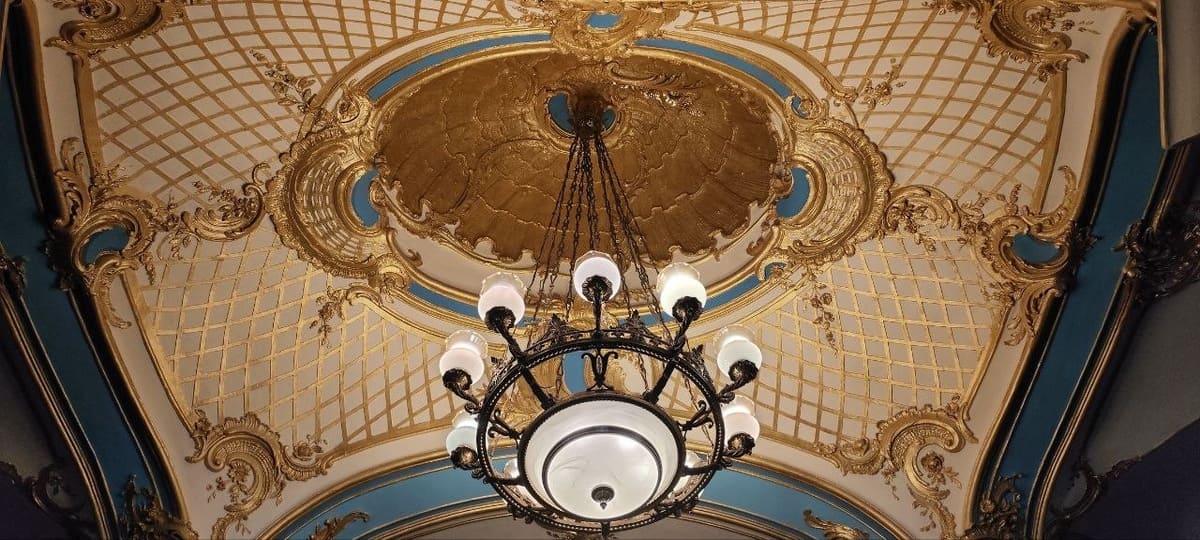 A fragment of the ceiling in the Hall of the Highest Male Class of the Sanduny Baths
Scandals, Intrigues, and the Empress's Jewels
Although the history of the baths dates back to the 18th century, they found their stone embodiment in 1808, and that luxurious palace we know today was built only in 1896.
It all began with a romantic drama. The young actor Sila Sandunov (by origin, the Georgian prince Silovan Zandukeli) fell in love with the prima of the imperial stage Elizaveta Uranova (real name—Fedorova). The couple had everything: talent, beauty, and passion, but there was also a bitter enemy—one of the richest people in the empire, Count Alexander Bezborodko. A famous womanizer, he was partial to Lizonka. The count did not plan to marry, but he was offended that she was traded for "some little actor". Bezborodko bribed the theater management, and they organized real persecution of the lovers. Despair brought the actress to the point that she fell on her knees before Catherine the Great herself—with a request for help.
The empress did help the couple get married and even generously gifted the newlyweds, but it was impossible to stay in St. Petersburg—the persecution continued. Sila and Liza fled to Moscow, sold the imperial jewels, bought land on the banks of the Neglinnaya, and opened the first stone baths.
The success was overwhelming: all of Moscow passed through here—from a simple peasant to the governor-general. They say that after the steam bath, Alexander Pushkin loved to sit in a barrel of ice water, and the talkative poet-partisan Denis Davydov found grateful listeners here for his stories about military campaigns.
 Love triangle: Sila Sandunov, Liza Uranova, and Count Bezborodko
How Sanduny Outran Time
After the death of Sila Sandunov, the baths changed several owners and ended up in the hands of the rich and famous Moscow entrepreneur Vera Firsanova. When the luxurious Khbudovsky Baths opened in Moscow in 1893, she and her second husband Alexey Ganetsky realized: the old Sanduny would not withstand the competition. A miracle was needed. And it happened.
The opening of the new complex in 1896 became a real technological breakthrough. Steam boilers fueled by fuel oil hummed in the basements. Through tunnels dug under the buildings, pipes stretched not only for hot and cold water but also for steam, which dried the walls, preventing mold. The air in the halls changed twice an hour. From the five-kopeck class to the "highest" section—everywhere the walls were lined with porcelain tiles, floors were made with a slope and gutters for drainage, and benches were made of stone so that nothing would absorb dirt.
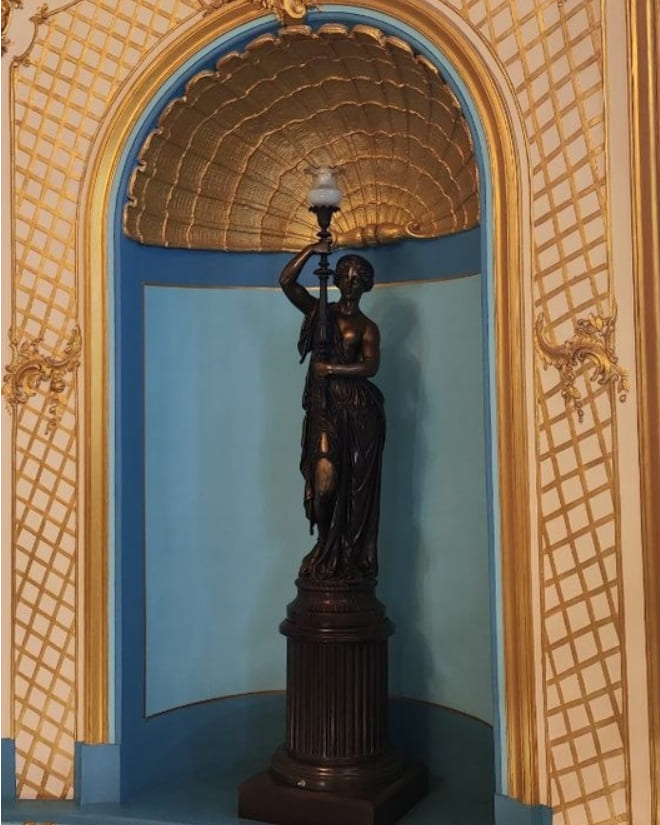 Elements of Rococo in the Hall of the Highest Male Class
But the main innovation was its own water supply and power plant. The city Mytishchi water supply could not give Sanduny the required 20 thousand buckets of water per hour—that was a third of all the water supplied to Moscow at that time! It was necessary to build its own water intake from the Moskva River at the Babiegrodskaya dam and run pipes past the Cathedral of Christ the Savior, along Volkhonka and Mokhovaya, right to the Sandunovsky lane. The newest American "Neptune" filters purified the water so well that the famous hygienist doctor Erisman claimed: it was even suitable for drinking.
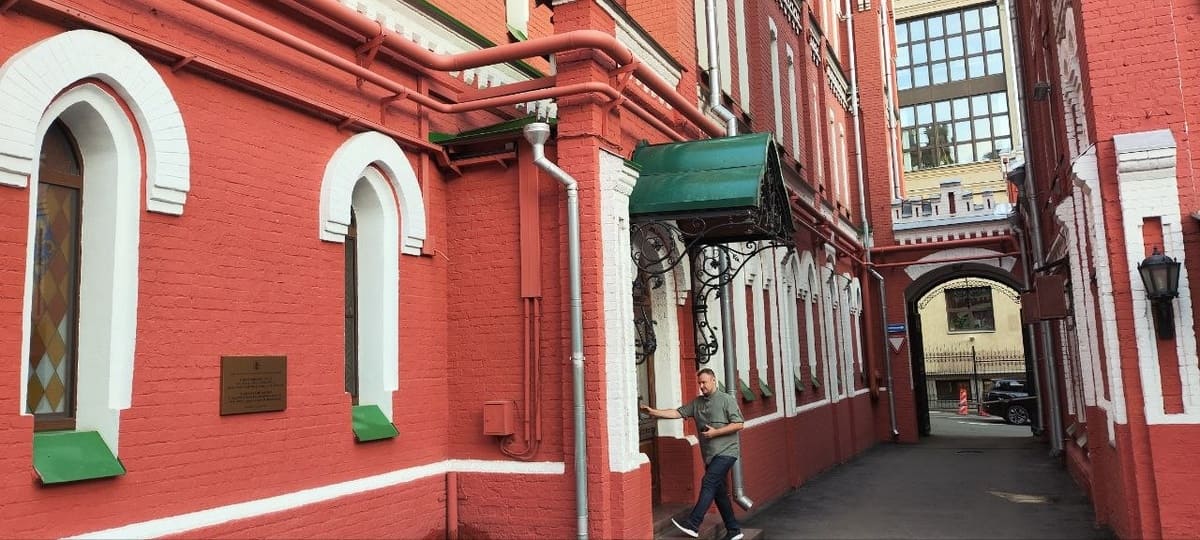 Sanduny of Vera Firsanova. The outer part of the building, from the courtyard.
Its own power plant gave light to a thousand lamps. And when Moscow was preparing for the coronation of Nicholas II in 1896, the authorities had to literally bow to Vera Firsanova—lend us, they say, electricity! After all, the only city Georgievskaya station was too low-powered.
The interiors of the bath palace amazed the imagination: Rococo, Gothic, Moorish style, Norwegian and Italian marble, English faience—everything was in abundance. In the "Pompeian" pool, the water was renewed every hour and was as clean as a mountain river. Sanitary standards were strictly observed, and employees regularly underwent medical examinations.
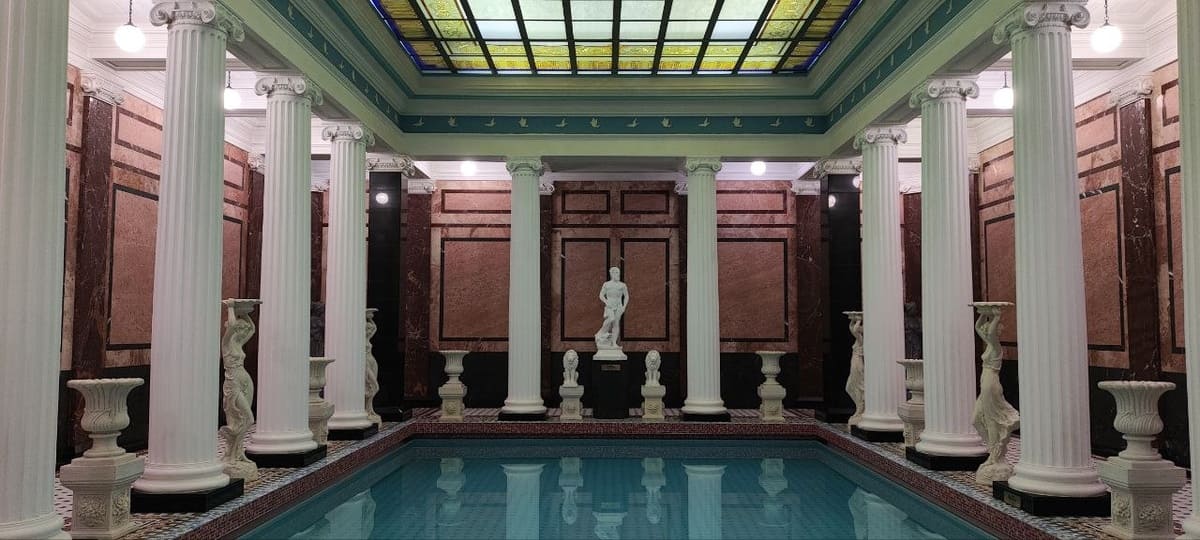 The "Pompeian" pool of the Sanduny Baths in the Highest Male Class
Golden Taps, Silver Basins, and the Bathhouse Mafia
For many years, Sanduny remained a place of power for the Moscow intelligentsia. Fyodor Chaliapin called them nothing less than "tsar-baths" and went to take a steam bath only on sanitary days when the baths were empty. All 400 bathhouse attendants—from boys to managers—ran to his impromptu concerts in the washroom. Vladimir Mayakovsky came here on Saturdays, occupied the same bench, and, being extremely squeamish, demanded that it be washed with special care.
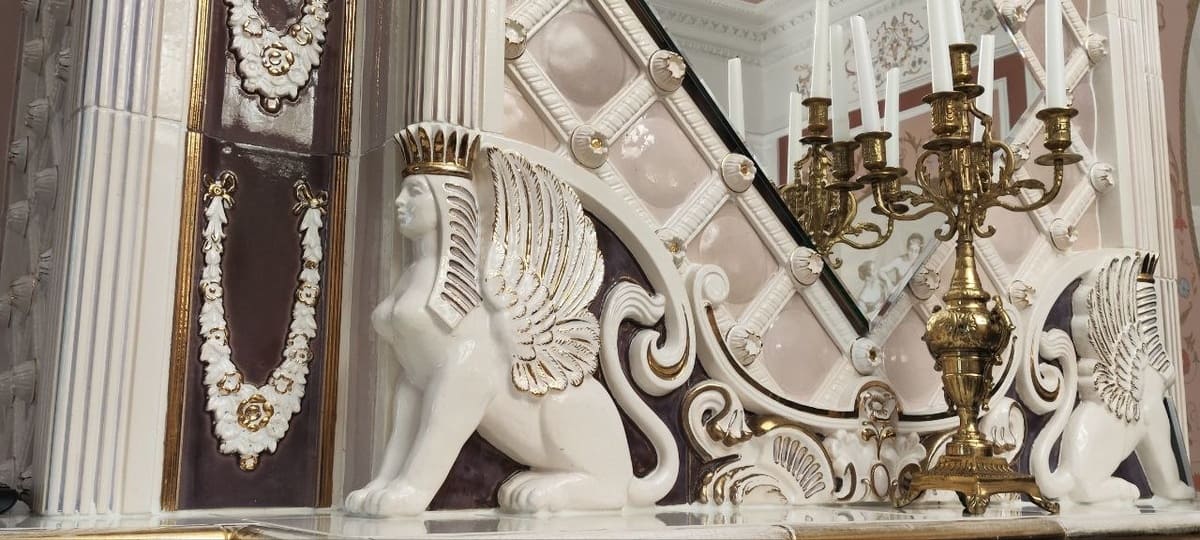 A decorative element in the fireplace hall
Legends circulated about Sanduny: about golden taps and silver basins. In fact, polished brass alloys shone like gold, and there was probably only one silver basin—and that was for the Moscow governor-general. But what is reliably known is that virtuoso thieves operated in such luxury. There was a lot to profit from here. In the cheap, five-kopeck classes, where people not only washed but also washed their clothes, the scheme was simple: the thieves furiously steamed the bath, people flew out of the steam room like a bullet, and the perpetrators took the clothes laid out for drying and instantly disappeared.
In the higher classes, the scheme was trickier. Visitors handed over valuables to the cloakroom and received a metal token on an elastic band, which they put on their arm or leg. The token had to be removed in the steam room to avoid burns. As soon as a person hung it on the handle of a washing bowl, the thief instantly replaced the token with another one. Instead of an expensive fur coat, a wealthy client received someone else's cheap rags. To maintain prestige and minimize theft, the baths had to make a deal with criminals: they paid the thieves "protection money" monthly, and then they themselves kept order.
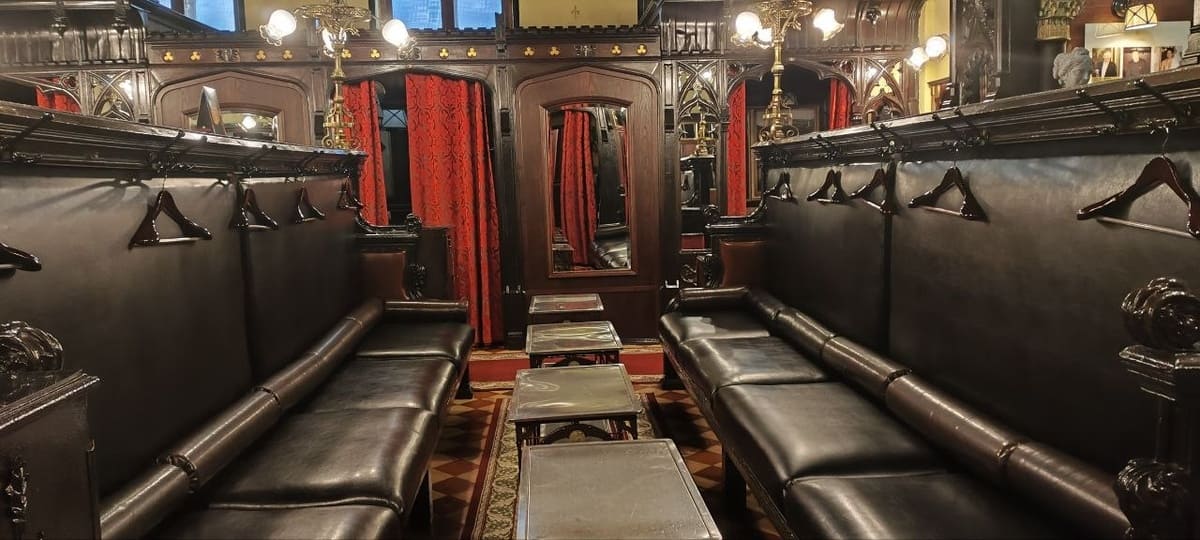 The dressing room of the Highest Male Class is entirely finished with wood—stained pine
Sanduny Today
In 1917, Vera Firsanova, as is not difficult to guess, lost all her property, but Sanduny... remained Sanduny. They survived the revolution, wars, Soviet power, and the wild 90s.
Today, it is not just a bathhouse, but a brand, a monument of Moscow entrepreneurship and engineering thought. Yes, the fuel oil boilers were replaced long ago with modern equipment, the old American filters gave way to the newest purification systems, and instead of its own power plant—there is now a stable city network. The interiors have been carefully restored, and the famous phrase "If you haven't been to Sanduny, you haven't seen Moscow" has gained a second life in the era of social networks: everyone considers it their duty to take an atmospheric photo.
Life is in full swing here and now. Top managers and deputies steam in the best rooms, more modest lovers of a birch broom steam in the simpler classes. On sanitary days, films are shot and excursions are held.
But the main thing is that the tradition has not been interrupted. Sanduny still remains a place not only for washing but also for communication, negotiations, and demonstrating status. Both Muscovites and guests of the capital still strive for the Sandunovsky lane. For beauty. For history. For that elusive feeling of old Moscow.
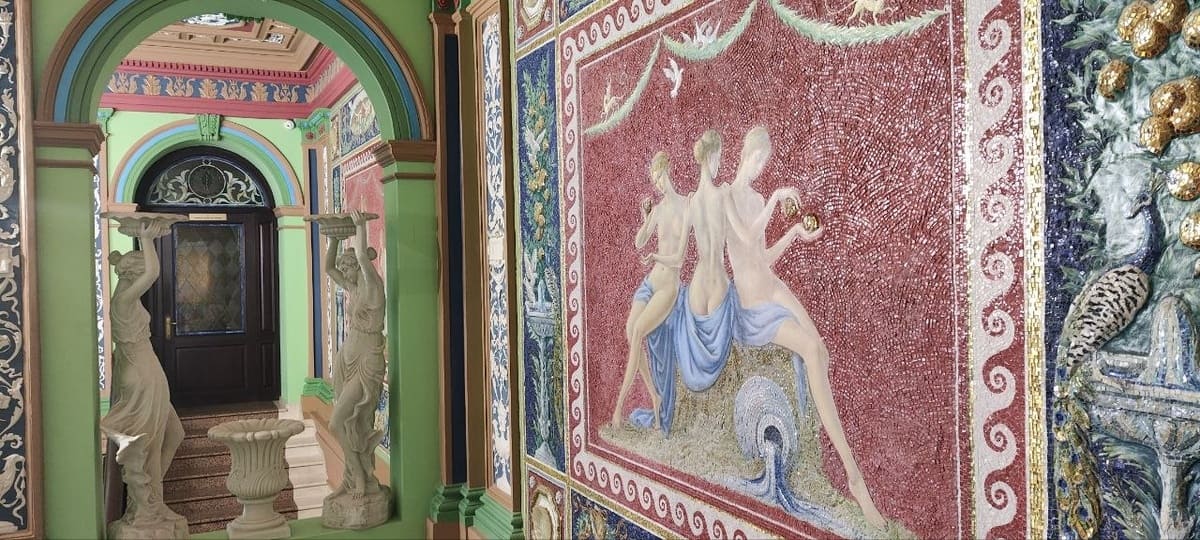 The Hall of the Highest Female Class
Have you been there? If not as a visitor, then at least as an excursionist?
© 2026 Ivetta Krasnogorskaya. All rights reserved.
Exclusive rights to this material (text and photographs) belong to the author. Any use of materials is permitted only with the written consent of the copyright holder. Full or partial copying, rewriting, distribution, and publication on the Internet without permission is prohibited.
When quoting, an active indexed link to the original source is required: mosivetta.ru/en/blog/sanduny-baths